
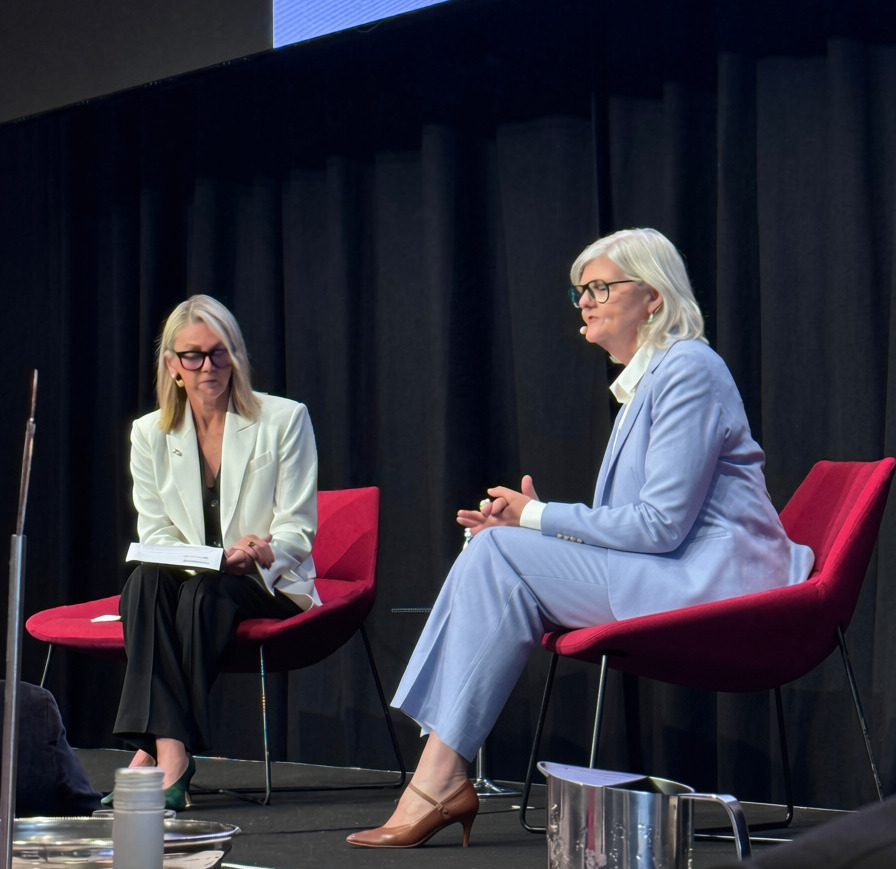
Along with fellow non-executive directors, I recently attended the Australian Institute of Company Directors luncheon in Sydney, where Her Excellency the Governor-General, Sam Mostyn AC, was the guest speaker.
An eloquent and engaging speaker, she shared reflections that offered plenty to consider for those serving on boards. But listening with my communications hat on, I was also struck by their relevance to how businesses and not-for-profit organisations build trust with their staff, customers and communities, as she described the clear connection between visibility, authenticity and trust.
How visibility builds trust in organisations
The Governor-General spoke about the importance of making her role visible and helping people understand what the office does.
I believe that is relevant to organisations of all sizes. We can be so familiar with our own work that we assume other people understand it too. Yet people may know our name without knowing much about what we do, who we support or how we make decisions.
Strategic communications can help close that gap. Sharing the people behind an organisation, explaining its work in plain language and showing how its decisions affect others gives people something tangible to understand and connect with.
This could mean introducing the team delivering a service, explaining the thinking behind a new initiative or following up on a project to show what it achieved. For a business, that might be a customer story demonstrating how it solved a particular problem. For a not-for-profit, it could be showing how funding or community support has translated into a service people can use.
These stories help people understand the organisation through its work and the experiences of those involved.
That visibility needs to reflect the organisation as it really is. The stories we share and the values we talk about need to be consistent with what people experience when they contact us, use our services or work alongside us. That is where authenticity becomes important: the communication and the experience need to match.
Listening before preparing our response
One of the Governor-General’s most memorable stories was about learning to listen more deeply.
She said that early in her board career, a fellow director pointed out that she was so focused on what she wanted to say next that she wasn’t fully listening to the discussion around the table. It is an easy habit to recognise, and one that extends well beyond the boardroom.
In communications, we spend a lot of time thinking about what we want people to know. We also need to make time to understand what they are asking, what concerns them, and what their experiences tell us.
That understanding can come from everyday conversations as well as formal feedback. The questions staff repeatedly answer, the enquiries arriving through a website and the discussions happening with customers or community members can all reveal gaps in our communications.
Those conversations can challenge our assumptions. They can also reveal that information we think is clear is confusing, or that the issue we have prioritised differs from the one that matters most to our audience.
Using those insights to shape website content, newsletters and service information makes communications more useful and relevant. It also gives staff a stronger basis for responding consistently.
I left lunch thinking about how much good communication rests on these everyday choices: being present, listening carefully, explaining clearly, and treating people with respect.
Our communications become more credible when people see those qualities in how we work.